Please note: The Atlantic harbor seals will temporarily be off exhibit while we improve their habitat for their comfort and well-being.
2025–2026 North Atlantic Right Whale Mother and Calf Pairs

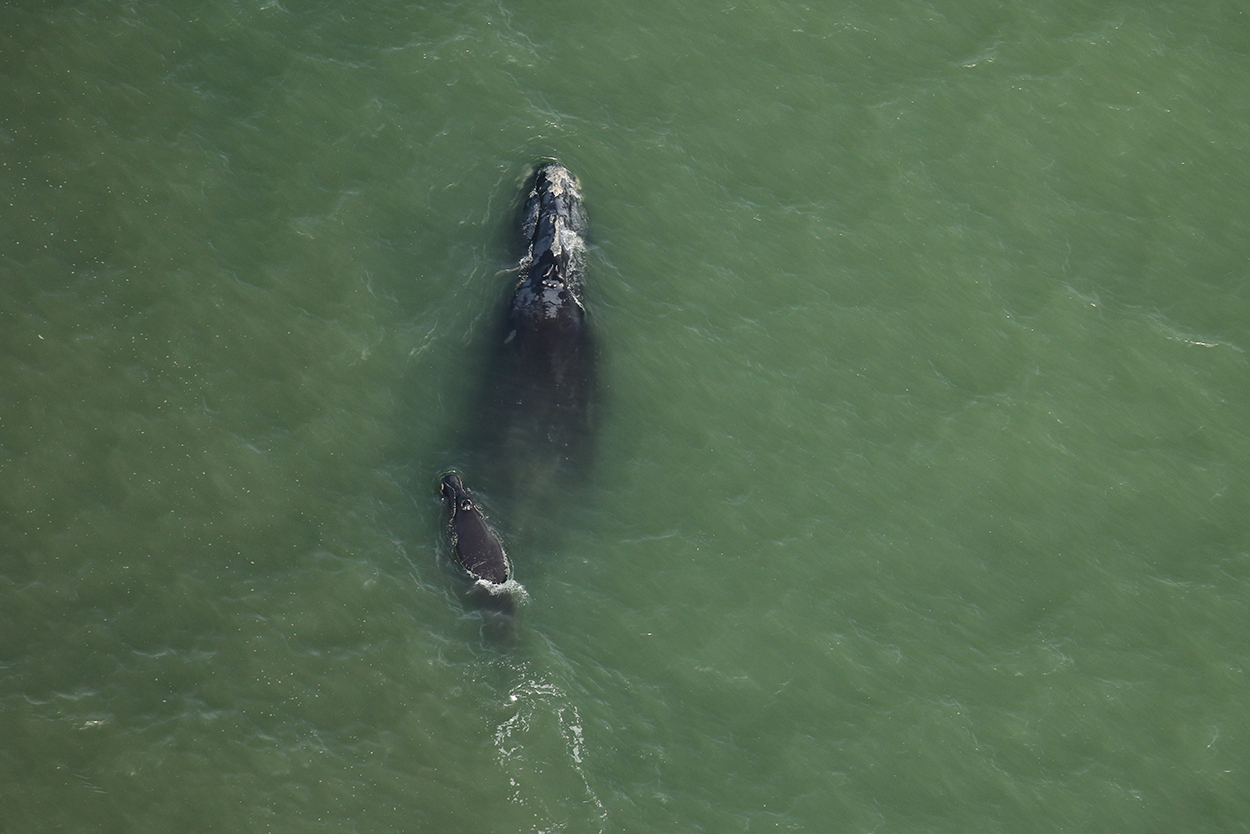
From November through April, during “calving season,” right whales and their young can be spotted together in the waters off the Southeastern coast of the United States, where the whales migrate to give birth. During this time, researchers on and above the water keep their eye out for whale mothers and their calves, a hopeful sight for the survival of these critically endangered marine animals.
The critically endangered North Atlantic right whale population has continued to gradually increase, rising again in number according to estimates from the North Atlantic Right Whale Consortium. The estimate for 2024 is 384 (+10/-9 for range of error), representing a 2.1 percent increase in population size from the 2023 estimate, which was recalculated as 376 (+4/-3).
After reaching a low of 358 individuals in 2020, the upward trend is encouraging for scientists, who emphasized that continued protections are needed to continue growing the population. Researchers at our Anderson Cabot Center for Ocean Life, from right whale biologists conducting research via boats and planes to working in the laboratory to study right whale health and hormones, are working diligently to learn more about and conserve this species.
Throughout the calving season, right whale researchers manage a detailed list of mom and calf pairs with biographical information that includes photographs, lineage, where the whales were last seen, how they were named, and the challenges each whale has faced. This data comes from the North Atlantic Right Whale Catalog, which is maintained by researchers with the Aquarium.
Calving season ends as the whales move back north for the spring and summer, officially wrapping in late April. During the 2025–2026 season, 23 new mother and calf pairs were sighted—the fourth-highest count ever. It’s positive news for the critically endangered species with an estimated population of about 380.
“While a healthy right whale can give birth every three to four years, we had been seeing nearly 10 years between calves for some females,” said Amy Warren, a right whale researcher at the Anderson Cabot Center. “Many of this year’s moms have had shorter intervals—18 of them previously gave birth within the last six years—giving us hope that they may be healthier and can help grow the population faster,”
Meet all of the 2025–2026 mom and calf pairs below, and learn more about what you can do to help protect right whales here.
Recent Sightings
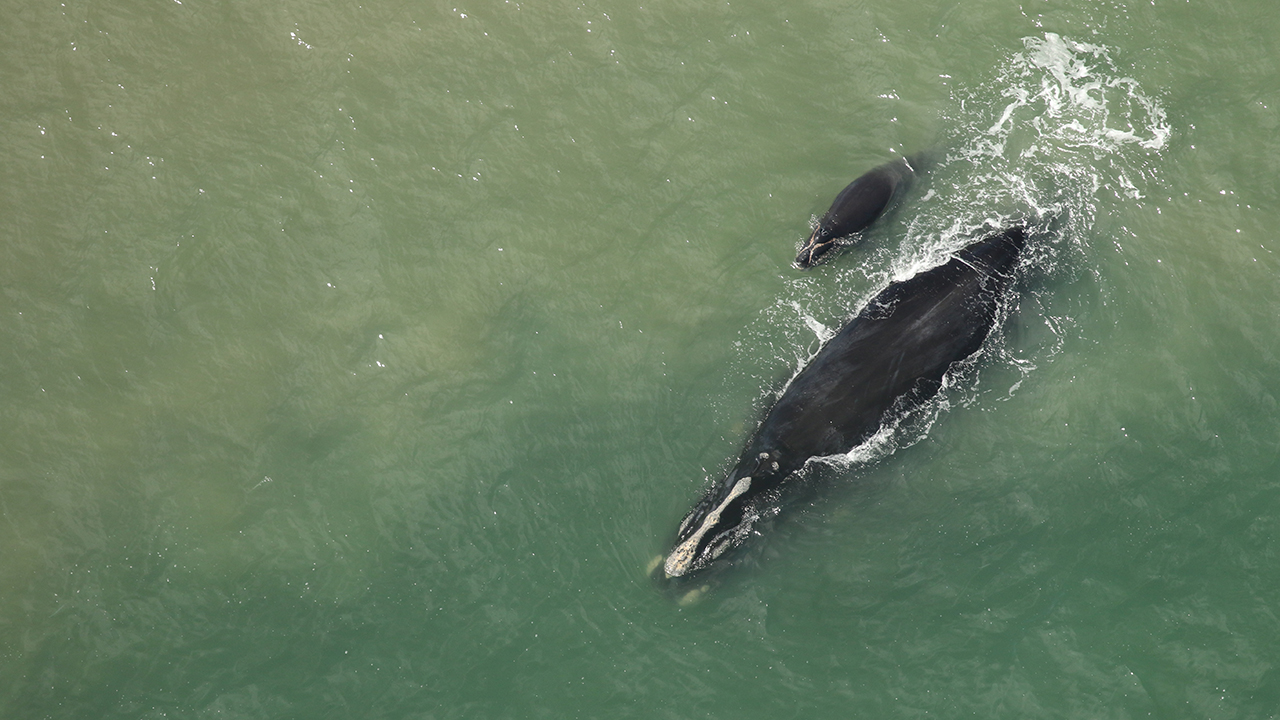
Mirror – Catalog #4617
Birth year: 2016
Age: 10 years old
Last calving year: N/A
Previous calves: N/A
Other known relatives: 2 grandparents, 2 great-grandparents, 2 siblings, 5 aunts/uncles, 1 cousin, 3 great aunts/uncles.
Direct human impacts: 2 entanglements
Human impacts on family members: 9 entanglements and 1 vessel strike (immediate family only)
Just when we thought the calving season may be coming to an end, we have a late addition! On March 14, 2026, the Florida Fish & Wildlife survey team spotted Mirror (Catalog #4617) with her first calf! This is the third first-time mom of the season, and at ten years old, Mirror is tied with Catalog #4610 as the youngest moms of the season. New moms and young moms are both very exciting things to celebrate within a fragile population. Mirror was born in 2016 to mother Frida (Catalog #3317). Her maternal grandparents are Silt (Catalog #1817) and Sparky (Catalog #1801). Mirror was recently named for the symmetry of the callosity patterns on her head, the right and left sides are mirror images of each other.
So far, Mirror’s immediate family has been spared from severe injuries, but 11 entanglement events between the 4 whales is not insignificant. In fact, Mirror’s sister Valkyrie (Catalog #3917) earned her warrior name because of her extensive entanglement scars. Looking into her extended family, Mirror’s uncle, Division (Catalog #5217) died most recently, succumbing to an active entanglement in January 2026.
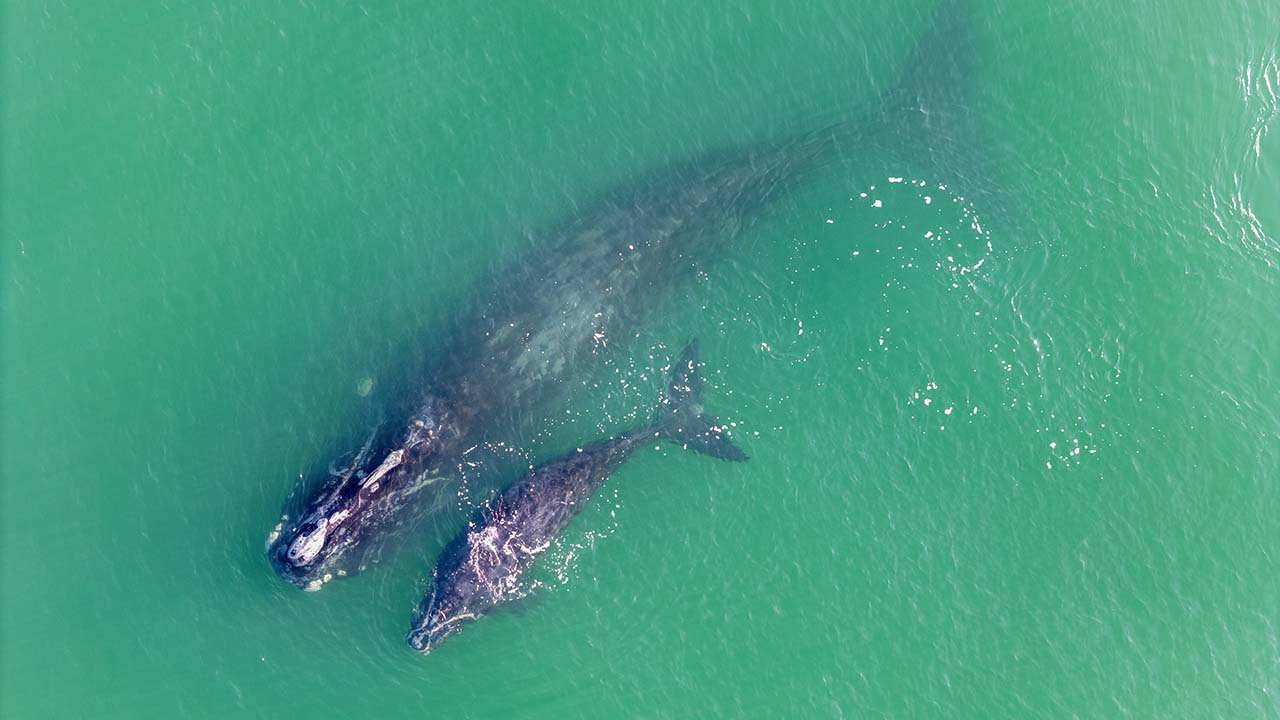
Ghost – Catalog #1515
Birth year: Unknown, first seen in 1985
Age: >41 years old
Last calving year: 2022
Previous calves: Catalog #1806, Spectre (Catalog #3915), Catalog #4715, Catalog #5215, and 4 uncataloged calves (in 1985, 1992, 1998, 2003)
Other known relatives: N/A
Direct human impacts: 1 entanglement
Human impacts on family members: 4 entanglements and 1 vessel strike
The calves just keep coming this year! On January 30, 2026, calf number 22 was spotted off the coast of Flagler Beach, FL. The mom, Ghost (Catalog #1515), was seen with her newest calf initially by beachgoers, and quickly confirmed by the Marineland Right Whale Project. Ghost was first identified in 1985 with a calf; since females are usually at least nine years old when they first give birth, it’s very likely she’s at least 50 years old or even older, since there’s no way to know if that was her first calf. This latest calf is her ninth! Unfortunately, four of her calves have never been cataloged. This sometimes means they didn’t survive, but more likely it could mean they weren’t documented well as a calf and couldn’t be identified when they returned as juveniles. With broader and more extensive survey efforts in recent decades, most juveniles can be identified and thus less calves remain uncatalogued.
Ghost was named for the appearance of the front part of her callosity pattern on her head. The two dark spots like the eye slots for a classic “sheet ghost.” Ghost has only experienced one minor entanglement, which is quite impressive for her long life. Of her four cataloged calves, three of which are still seen regularly, they’ve also just seen a few minor events among them.
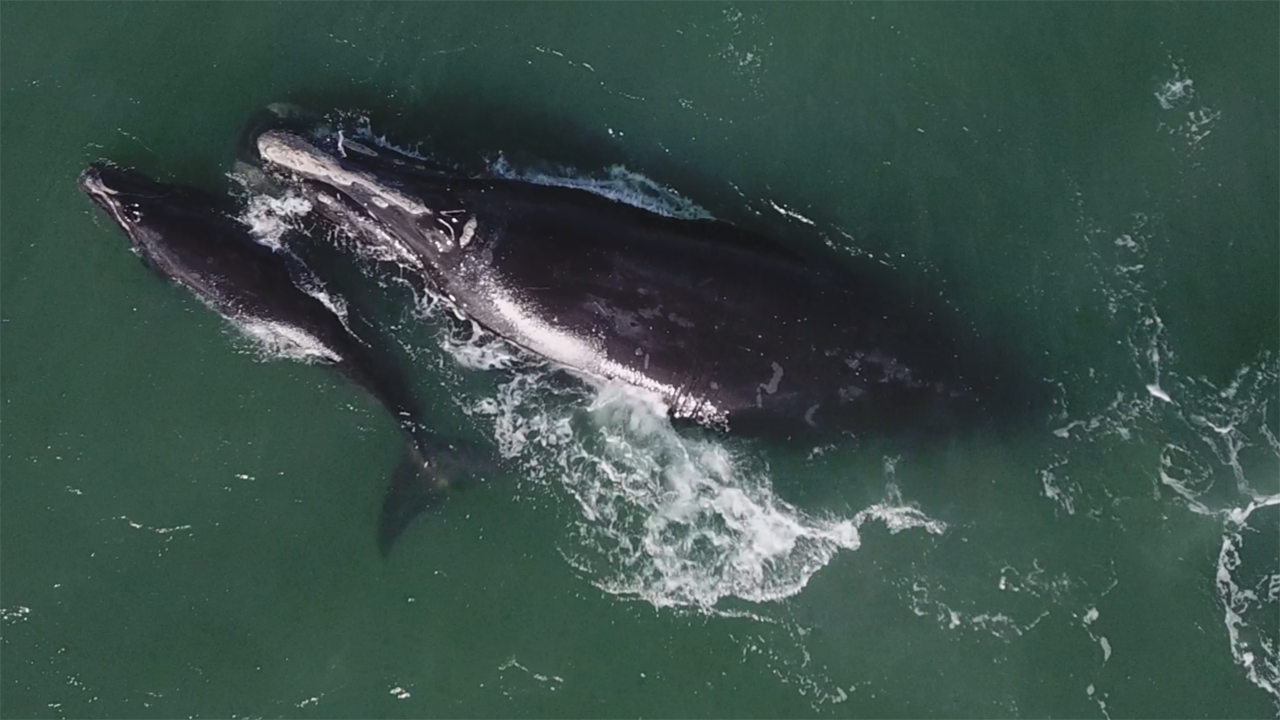
Slalom – Catalog #1245
Birth year: 1982
Age: 44 years old
Last calving year: 2022
Previous calves: Insignia (Catalog #2645), Catalog #3145, Catalog #3545, Mogul (Catalog #3845), Piste (Catalog #4145), Catalog #5245
Other known relatives: 4 grand-calves, 6 siblings, 10 nieces/nephews, 3 great nieces/nephews
Direct human impacts: 7 entanglements
Human impacts on family members: 47 entanglements and 5 vessel strikes (excluding extended family)
On January 22, 2026, beachgoers in Daytona Beach, Florida spotted a right whale mom and calf just off the coast, later identified as Slalom and a new calf! Slalom was born in 1982 to mother Wart (Catalog #1140), and this is her seventh known calf. Slalom was named for the appearance of the callosity pattern on her head, all the bumps and turns resembling a slalom course on a ski slope.
Being the eldest daughter of Wart, Slalom has a large extended family. In fact, two of her nieces are fellow moms this year: Millipede and Bocce! Unfortunately, such a large family has experienced a large number of injuries. Slalom herself has visible evidence of her seven entanglements, with obvious scars around her head and tail. We’re happy that she’s managed to survive these events and is still able to continue having calves.
Giza – Catalog #3020
Birth year: Unknown, first seen in 2000
Age: >26 years old
Last calving year: 2021
Previous calves: Hopscotch (Catalog #3820), Brussels Sprouts (Catalog #5191), uncatalogued calf in 2011
Other known relatives: 1 grand calf
Direct human impacts: 2 entanglements
Human impacts on family members: 4 entanglements
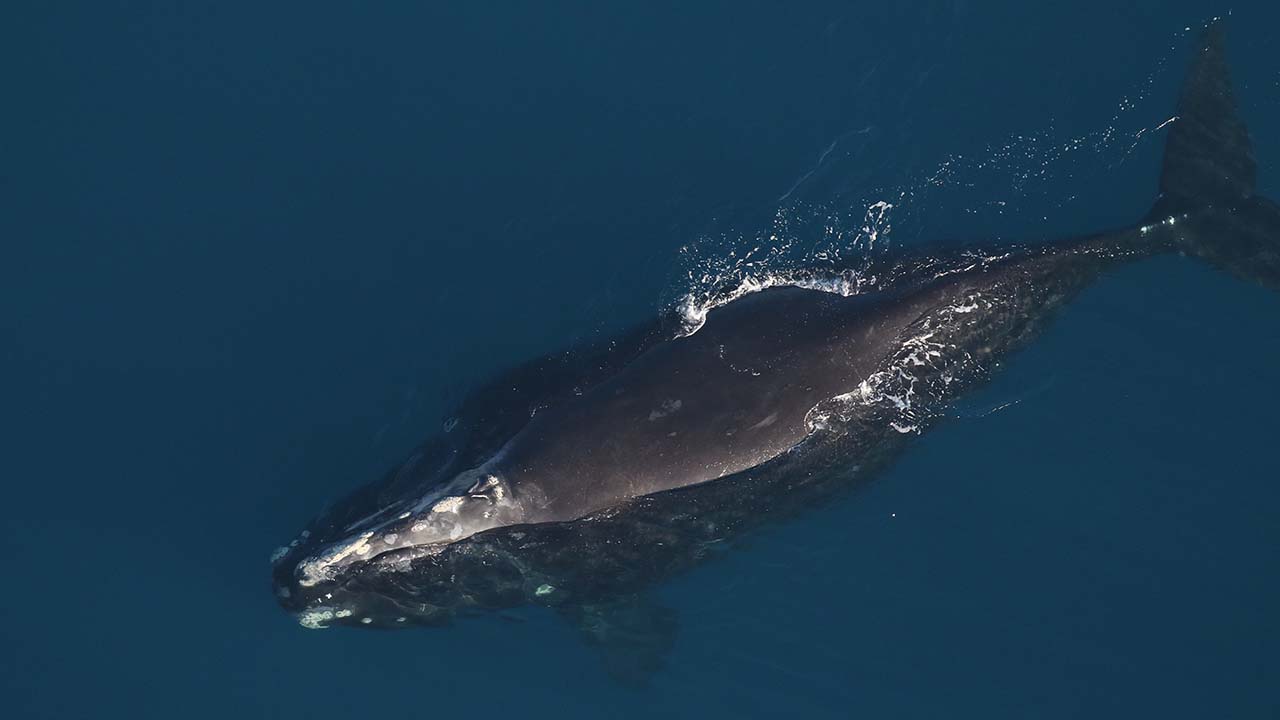
On January 20, 2026, recreational boaters off the coast of South Carolina reported a pair of right whales to the National Oceanic and Atmospheric Administration sighting hotline. The boaters shared footage they collected of the pair, which was determined to be mother Giza with a new calf! Giza was first seen in 2000 at an unknown age, so we know that she’s at least 26 years old, and this is her fourth known calf. Giza was named for the Egyptian pyramids in Giza because the alignment of three features of her callosity pattern resemble the placement of the three pyramids.
Giza and her previous cataloged calves have experienced two entanglements each, luckily all minor events. Hopscotch and Brussels Sprouts were both named in recent years for the appearance of their callosity patterns. Giza’s 2011 calf was only seen once on the calving ground and never resighted so it was never cataloged. Giza recently became a grandmother when her daughter Hopscotch gave birth in 2024!
Magic – Catalog #1243
Birth year: 1982
Age: 44 years old
Last calving year: 2021
Previous calves: Lucky (Catalog #2143), Ellipsis (Catalog #2743), Catalog #3343, Catalog #3643, Catalog #3843, Kilo (Catalog #4143), Catalog #5143
Other known relatives: 5 siblings
Direct human impacts: 2 entanglements
Human impacts on family members: 27 entanglements and 3 fatal vessel strikes
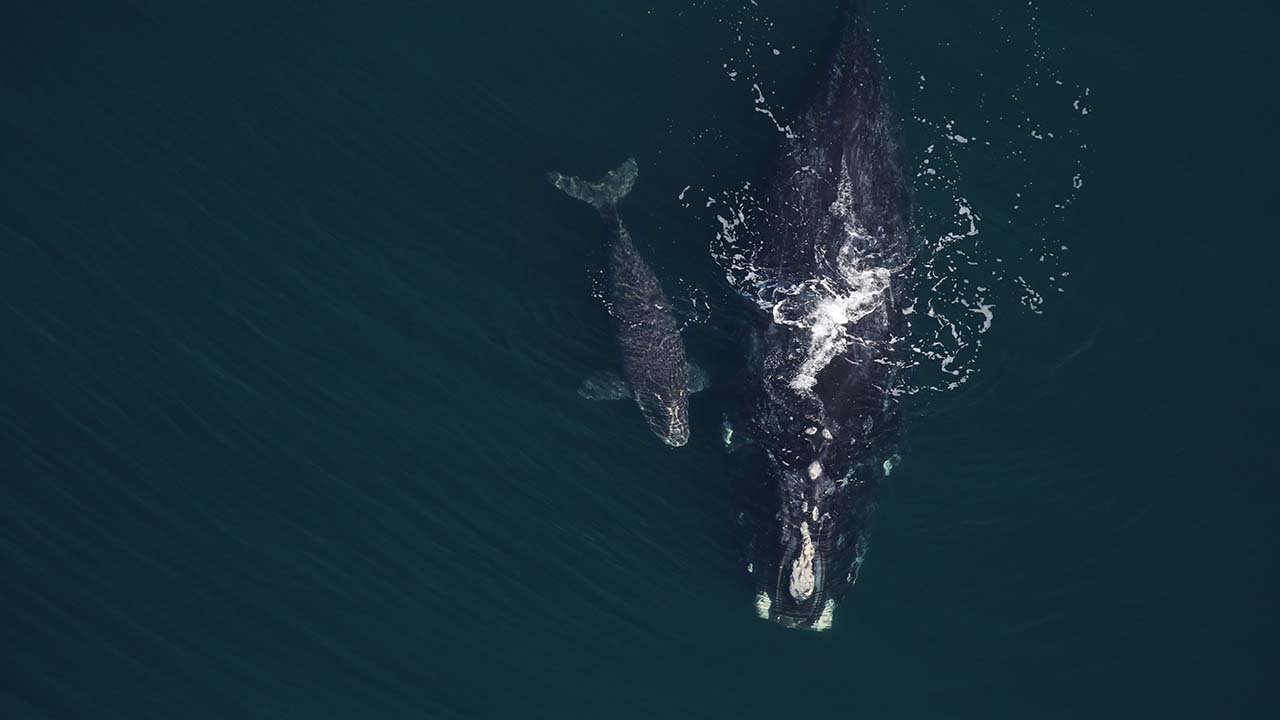
On January 16, 2026, the Clearwater Marine Aquarium’s Georgia team spotted Magic (#Catalog 1243) with her latest calf. Magic was born in 1982 to mother Catalog #1242 and father Orangepeel (Catalog #1617). Magic has five known siblings and seven previous calves—her latest was born in 2021, and she joins a cohort of six fellow moms this season that all gave birth in 2021.
Magic’s family has no shortage of anthropogenic injuries and tragic stories. Her sister, Reyna (Catalog #1909), was hit and killed by a vessel while carrying a full-term fetus. The skeletons of Reyna and her unborn calf are currently on display at the New Bedford Whaling Museum in New Bedford, MA. Magic’s first calf, Lucky (Catalog #2143) was struck by a vessel at just a few months old. Despite the deep propeller cuts that remained on her body, she survived, earning herself the name Lucky. But her luck only lasted until her first pregnancy caused her 14-year-old injury to reopen and become fatal. This outcome was a fear for another mom this season, Caterpillar, who also has large propeller cuts on her body, but she successfully gave birth to her first calf.
Catalog #4610
Birth year: 2016
Age: 10 years old
Last calving year: N/A
Previous calves: N/A
Other known relatives: 4 siblings, 2 nieces/nephews
Direct human impacts: None!
Human impacts on family members: 11 entanglements
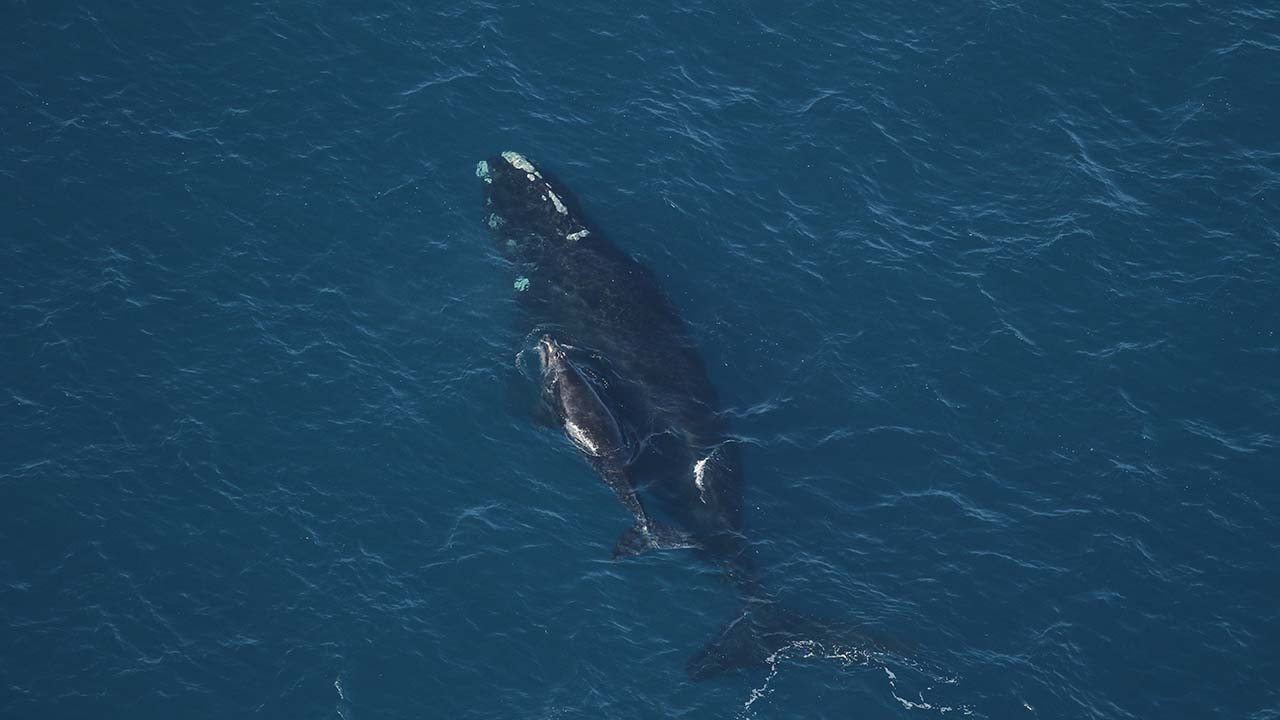
On January 8, 2026, the Clearwater Marine Aquarium’s North Carolina team spotted Catalog #4610 with her first known calf! Catalog #4610 was born in 2016 to mother Swerve (Catalog #1810), and at ten years old, she’s our youngest mom of the season. She’s also only the second first-time-mom of the calving season so far. She has four known siblings, the youngest just born to Swerve in 2024, and two nieces and nephews from her sister Arrow (Catalog #3290).
Besides her brother’s severe entanglement, the rest of her family has escaped with only minor entanglements. Miraculously, Catalog #4610 has no sign of any scars or injuries from entanglements or vessel strikes! Right whales are considered adults, and females able to calve, by the age of nine. While there are a few exceptions of younger females giving birth, in recent years, first-time moms are between 15-20 years old. Perhaps Catalog #4610 is proof that without any injuries, whales can get back to their natural life cycles.
Catalog #3593
Birth year: Unknown, first seen in 2005
Age: >21 years old
Last calving year: 2021
Previous calves: Catalog #5193
Other known relatives: N/A
Direct human impacts: 2 entanglements
Human impacts on family members: N/A
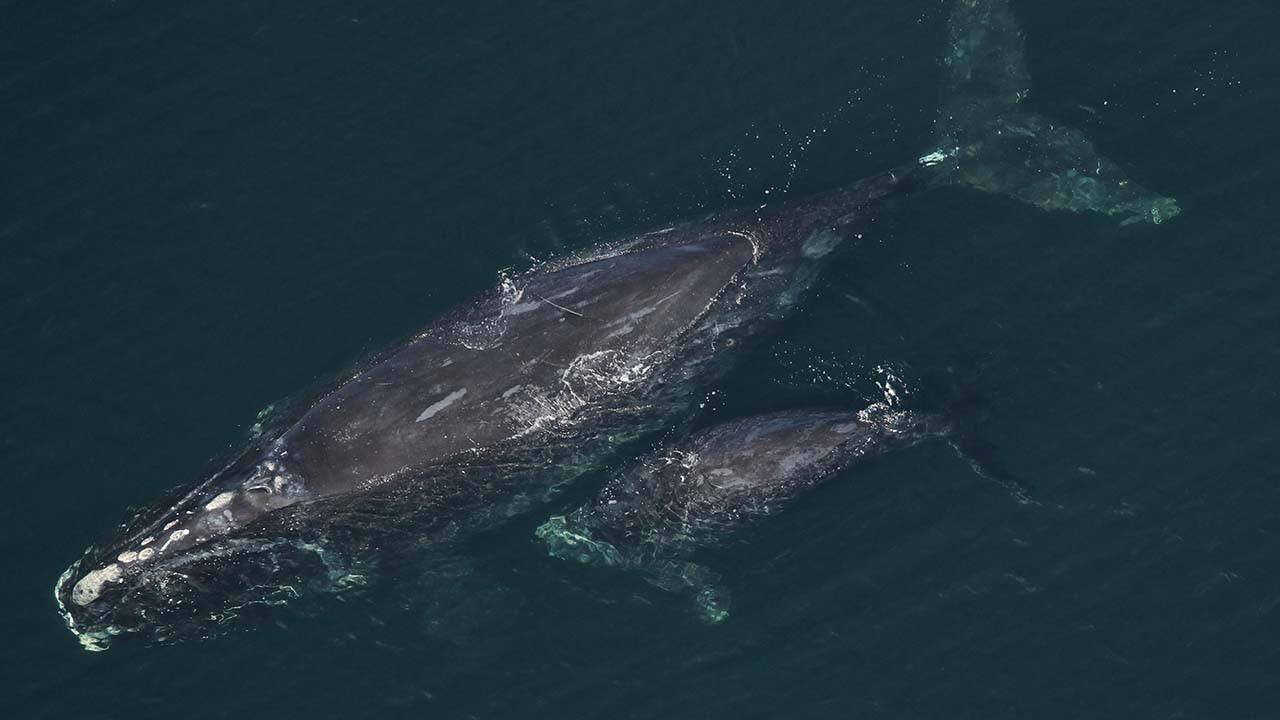
On January 6, 2026, the Florida Fish and Wildlife aerial survey team spotted Catalog #3593 with a new calf. Catalog #3593 is a very mysterious whale, first seen in 2005 when she appeared to be full-grown. We didn’t even know she was female until she was seen with her first known calf in 2021—and they were only seen together one day. This sighting with her new calf was her first sighting since then. Her 2021 calf, now Catalog #5193, was seen a year later, on its own, and has been seen regularly since.
Since her first sighting 21 years ago, Catalog #5193 has only been seen in five other years for a total of nine sightings. Most cataloged right whales are seen at least once every one-to-two years. For context, another mom this season, Millipede (Catalog #3520), also has a 21-year sighting history and she’s been seen 244 times across those same years. Catalog #3593 has also never been seen in several of the major right whale habitats like Cape Cod Bay, the Bay of Fundy, or the Gulf of St. Lawrence. Where she spends most of her time is truly a mystery, but okay by us as long as she stays safe and healthy and shows up with her new calves at least once.
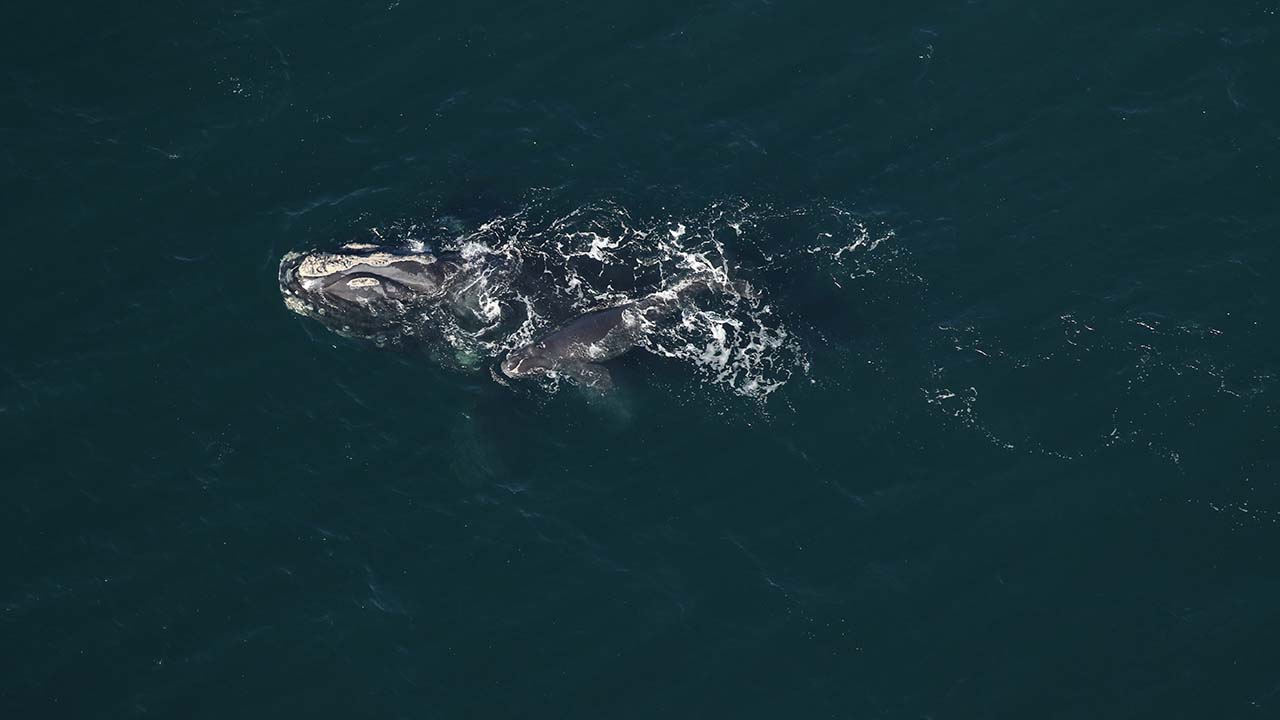
Skittle – Catalog #3260
Birth year: Unknown, first seen in 2002
Age: >24 years old
Last calving year: 2024
Previous calves: Catalog #4096 and an uncatalogued calf in 2024
Other known relatives: N/A
Direct human impacts: 4 entanglements
Human impacts on family members: N/A
On January 5, 2026, the Florida Fish and Wildlife aerial survey team spotted Skittle with a new calf. Skittle was first seen in 2002 at an unknown age, so we know she’s at least 24 years old. She was named for the shape of the callosity pattern on her head that resembles a bowling pin, which is historically known as a “skittle.” Skittle has had two calves previously, but neither of them survived. Similar to two other moms this year (Juno and Bermuda) she had a shorter two-year calving interval after not needing to nurse her last calf. While it’s not uncommon for a calf to be lost on the calving grounds, it typically doesn’t happen to the same whale multiple times, with the exception of a whale named Half Note (Catalog #1301) who has lost seven out of her eight calves. In both 2010 and 2024, Skittle was seen with a new calf but after a few weeks she was resighted in the calving grounds without her calf. Calves feed exclusively off their mother’s milk for the first ~six months of their lives, so before that time, they are not able to survive on their own. We hope this latest calf will change the trend.
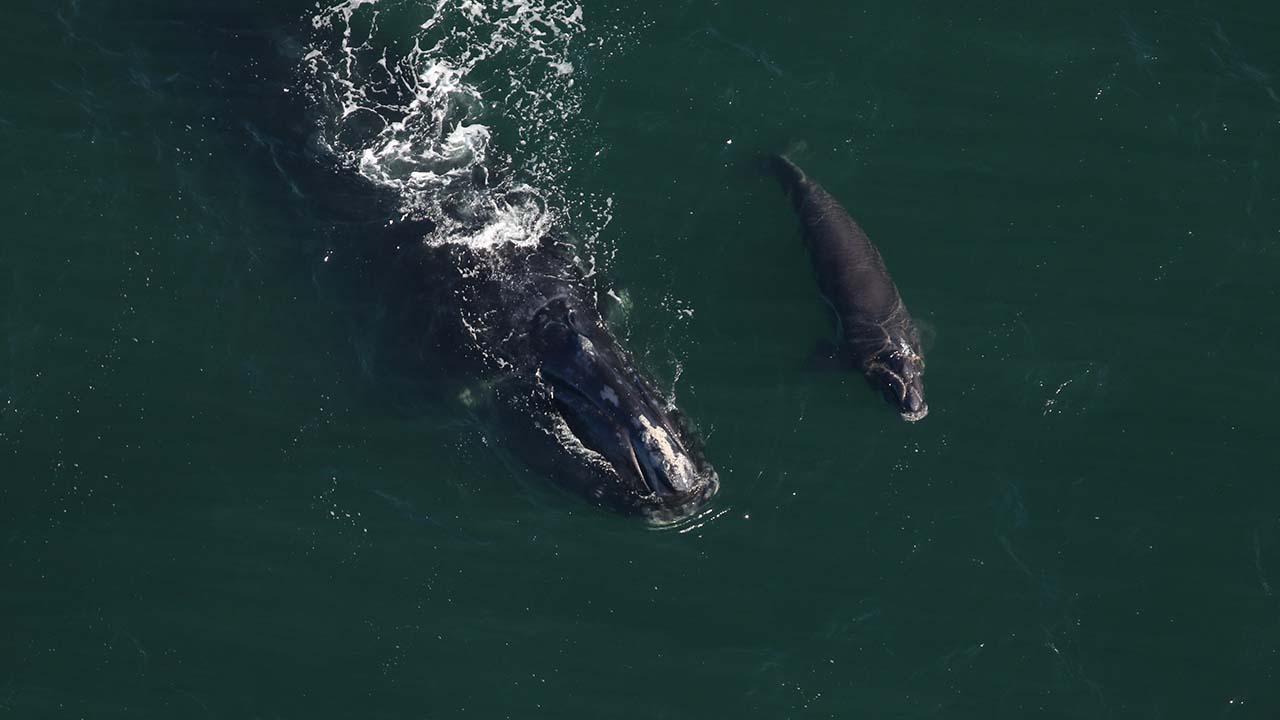
Boomerang – Catalog #2503
Birth year: 1995
Age: 31 years old
Last calving year: 2019
Previous calves: Lone Star (Catalog #3620), Frisbee (Catalog #3980), Catalog #4903, and an uncatalogued calf in 2014
Other known relatives: maternal grandparents, 4 siblings, 9 aunts/uncles, 14 cousins
Direct human impacts: 7 entanglements
Human impacts on family members: 26 entanglements and 1 vessel strike (immediate family only)
Our first calf of the new year was seen January 1, 2026, by the Clearwater Marine Aquarium’s Georgia team. This is Boomerang’s fifth known calf. Boomerang was born in 1995 to mother Trilogy (Catalog #1503) and father, Catalog #1043. She was named for a scar on the underside of her fluke that’s in the shape of a boomerang. Boomerang is the granddaughter of Baldy (Catalog #1240) and Dingle (Catalog #1144) and has a large family, including Echo (Catalog #2642), another mom this year, who is her aunt!
Boomerang was once famous for her travels when she “boomeranged” around southern Florida and took her 2006 calf, now Lone Star (Catalog #3620), all the way to Texas before heading back up the east coast to the summer feeding grounds. Lone Star was named after the state’s nickname, being one of the few right whales to ever visit Texas. Boomerang’s large family has been through too many injuries to go into detail. Three of the her relatives died in 2017, the year when 17 right whale deaths sparked the ongoing Unusual Mortality Event.

Binary – Catalog #3010
Birth year: Unknown, first seen in 2000
Age: >26 years old
Last calving year: 2021
Previous calves: Twister (Catalog #3510), Catalog #4110, Catalog #5110
Other known relatives: N/A
Direct human impacts: 3 entanglements
Human impacts on family members: 8 entanglements
Also on December 27, 2025, the Clearwater Marine Aquarium’s Georgia team spotted Binary with a new calf. Binary is another female of unknown history, first seen in 2000, and this is her fourth known calf. She was named for a small part of her callosity pattern that resembles two converging stars in a binary star system.
Binary has experienced a few entanglements in her life but her eldest son, Twister (Catalog #3510), just 21 years old as seen the worst. He’s been entangled at least six times and was even named for the severe scars that remain on his tailstock.
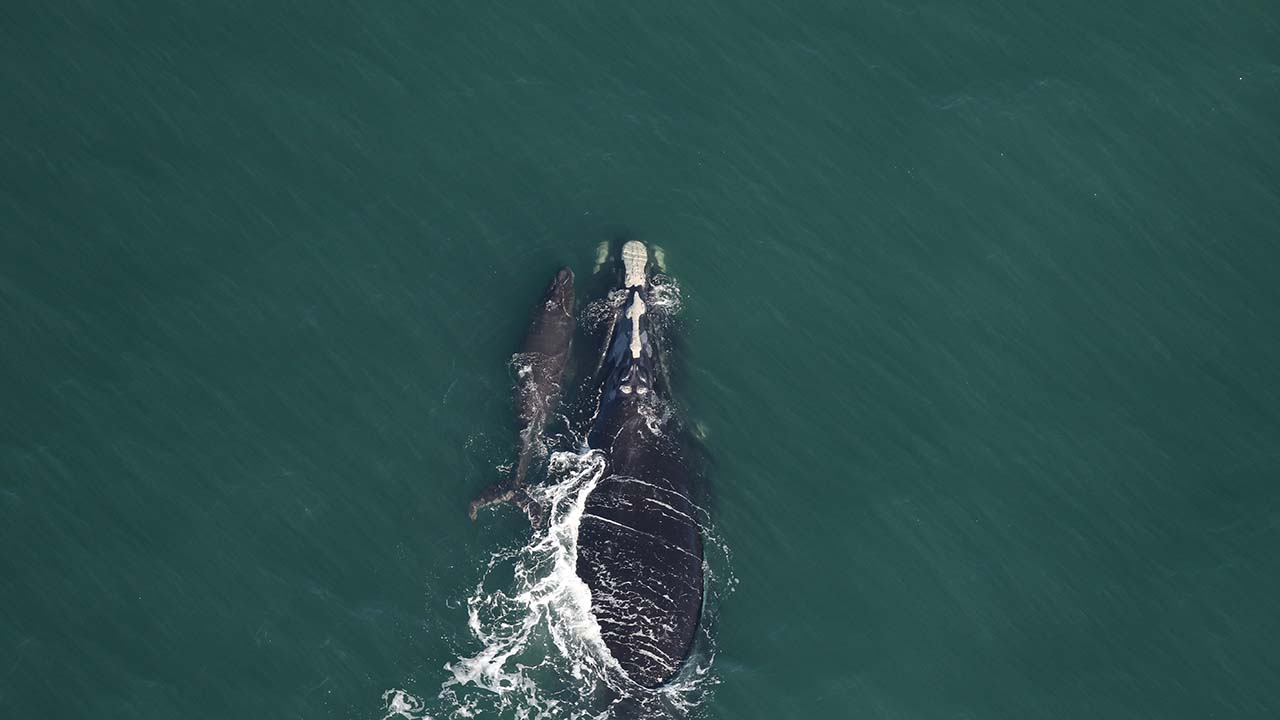
Juno – Catalog #1612
Birth year: Unknown, first seen in 1986
Age: >40 years old
Last calving year: 2024
Previous calves: Catalog #1613, Catalog #2212, Limulus (Catalog #2912), Catalog #3312, Catalog #3994, Cavatappi (Catalog #4540), Catalog #5012, Catalog #5412
Other known relatives: 4 grand-calves
Direct human impacts: 4 entanglements
Human impacts on family members: 25 entanglements and 3 vessel strikes
On December 27, 2025, the Clearwater Marine Aquarium’s Georgia team spotted Juno with a new calf. Juno was first seen in 1986 with a newborn calf. Being that females are typically 10-20 years old the first time they calf, and we don’t even know if that was her first, it’s possible she’s closer to 50 or even 60 years old! This calf is Juno’s ninth known calf! She was named after the Roman goddess because of the convex shape of her head, when seen from a vessel, which researchers call a “Roman nose.”
Juno’s many previous calves are no strangers to anthropogenic injuries, though most have luckily been fairly minor events. Possibly the most tragic, and the reason Juno gave birth after just a two-year interval, is because her latest calf died from a vessel strike injury to the head during the 2024 calving season. Similar to Bermuda’s situation, not having to nurse the calf for the full term, Juno was able to get pregnant again in a shorter timeframe.
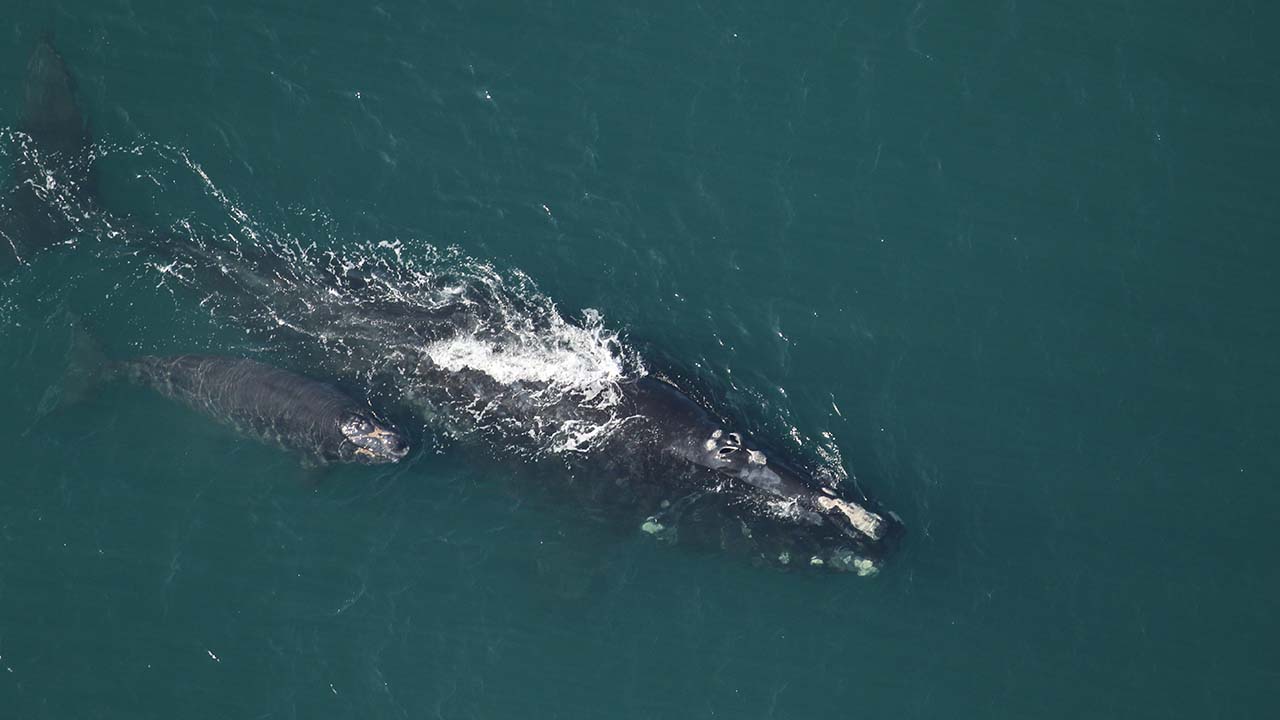
Mantis – Catalog #1620
Birth year: Unknown, first seen in 1986
Age: >40 years old
Last calving year: 2022
Previous calves: Porcia (Catalog #3293), Squilla (Catalog #3720), Nymph (Catalog #4020), Catalog #4520, Catalog #5220, and uncatalogued calves in 1996 and 2004
Other known relatives: 4 grand-calves
Direct human impacts: 2 entanglements
Human impacts on family members: 16 entanglements and 1 vessel strike
On December 26, 2025, the Clearwater Marine Aquarium’s South Carolina team spotted Mantis (Catalog #1620) with a new calf. Mantis was first seen in 1986 but already on her own, so her age is unknown. Mantis was named for her callosity pattern which resembles the eyes and body of a mantis shrimp. She’s had seven previous calves, including her daughter Squilla (named for the genus of the mantis shrimp because of her mother) who is another mom this year! Including Squilla’s current calf, Mantis has four grand calves!
Squilla’s calf born this year is unfortunately Mantis’ only surviving grand-calves. Her other three grand-calves all succumbed to fatal entanglements by ages one, three, and ten. Most recently in 2024, when Squilla’s previous calf washed up deceased. (See Squilla’s bio below for more details.) The other two were both born to her daughter Porcia. We hope for much better outcomes for these latest calves in hopes to carry on Mantis’ genes into the future.

Uca – Catalog #3390
Birth year: Unknown, first seen in 2003
Age: >23 years old
Last calving year: 2012
Previous calves: Catalog #4290
Other known relatives: N/A
Direct human impacts: 5 entanglements
Human impacts on family members: 1 entanglement
Another new calf was detected on December 23, 2025, as the Clearwater Marine Aquarium’s South Carolina team spotted Uca with her latest calf. Uca is another whale of unknown origin, and was first seen on her own in 2003. She was named for her callosity pattern where one of the islands (circular callosity patch) on her head is much bigger than the others. Uca is the genus of the fiddler crab, famous for its unevenly sized claws.
This is only Uca’s second calf and her first was born 14 years ago! While impossible to know for sure, this extra-long calving interval could have been the result of her five-plus entanglements, clearly seen by the extensive scarring on her tail stock and some across her head. We are glad she’s seemingly healthy enough to give birth again and wish the best for her and her new little one.
Bermuda – Catalog #3780
Birth year: Unknown, first seen in 2007
Age: >19 years old
Last calving year: 2024
Previous calves: 2024CalfOf3780 (uncataloged)
Other known relatives: N/A
Direct human impacts: 1 entanglement
Human impacts on family members: N/A
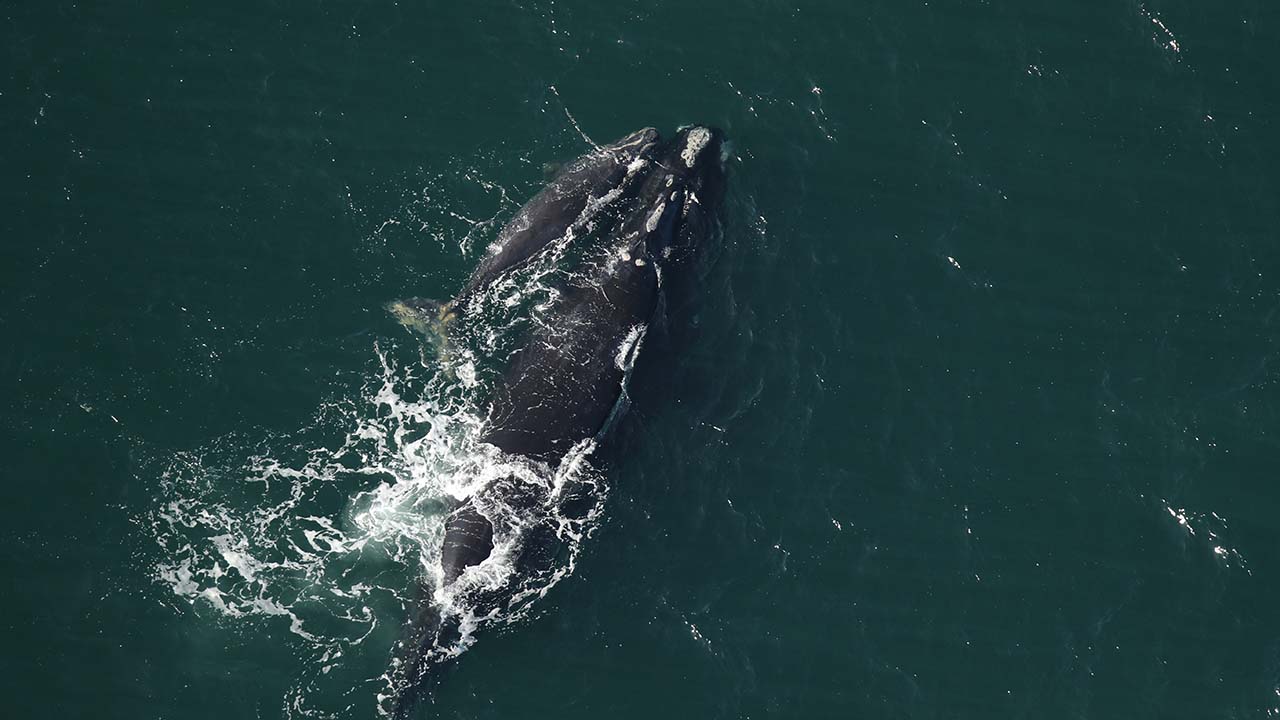
We hit double digits with the tenth calf of the season on December 23, 2025, when the Florida Fish and Wildlife aerial survey team spotted Bermuda (Catalog #3780) with a new calf. Bermuda has a mysterious history; she was first documented in 2007 but already appearing to be full grown, making her exact age unknown. The mystery is reflected in her name—she was one of the 18 whales newly named in 2025—which was mostly inspired by the three small, dark callosities on her head in a triangular shape, bringing to mind the Bermuda triangle.
Generally, the shortest calving interval for a north Atlantic right whale is three years. After nursing a calf for nearly a year, females need some time to replenish their fat stores before getting pregnant again. In this case there’s only a two-year-interval since Bermuda’s last calf, but that’s unfortunately because her previous calf likely did not survive. It was only seen once shortly after it was born and then a bit later, Bermuda was seen alone. A calf must be at least six months old before it could potentially survive on its own. While this sounds upsetting, it’s an unfortunate reality that not every animal born will survive in the wild. We hope this new calf will have a better outcome.

Echo – Catalog #2642
Birth year: 1996
Age: 30 years old
Last calving year: 2020
Previous calves: Catalog #3742, Quill (Catalog #4091), Catalog #5042
Other known relatives: 10 siblings, 16 nieces/nephews, 4 great nieces/nephews
Direct human impacts: 4 entanglements and 1 vessel strike
Human impacts on family members: 59 entanglements and 2 vessel strikes
On December 21, 2025, the Clearwater Marine Aquarium’s Georgia team spotted Echo with a new calf. Echo was born in 1996 to mother Kleenex (Catalog #1142) and father Dingle (Catalog #1144). This is Echo’s fourth known calf, and her previous three are all still seen regularly. Echo was named for the single island (circular callosity pattern) on her head; in Morse code, the single dot represents the letter “E” which is “echo” in the NATO phonetic alphabet. Echo has a very large family, with six siblings by her mom, and four by her father.
Such a large family is no stranger to injuries. Her mother Kleenex hasn’t been seen since 2018 after being seen entangled, with rope around her head for at least four years. Echo herself has visible scars from her struggles. She has a healed but mangled fluke tip from when her tail came into contact with a vessel at just about seven months old. And most recently, her tail stock shows scars from a severe entanglement in 2023. We are very glad she survived that event and was healthy enough to have a calf just two years later. Many whales, like her mother, have not been as fortunate.
Tripelago – Catalog #2614
Birth year: 1996
Age: 30 years old
Last calving year: 2022
Previous calves: Barbell (Catalog #3414), Sawtooth (Catalog #3714), Catalog #4014, Atoll (Catalog #4714), Catalog #5214
Other known relatives: 3 siblings
Direct human impacts: 2 entanglements
Human impacts on family members: 16 entanglements and 1 vessel strike
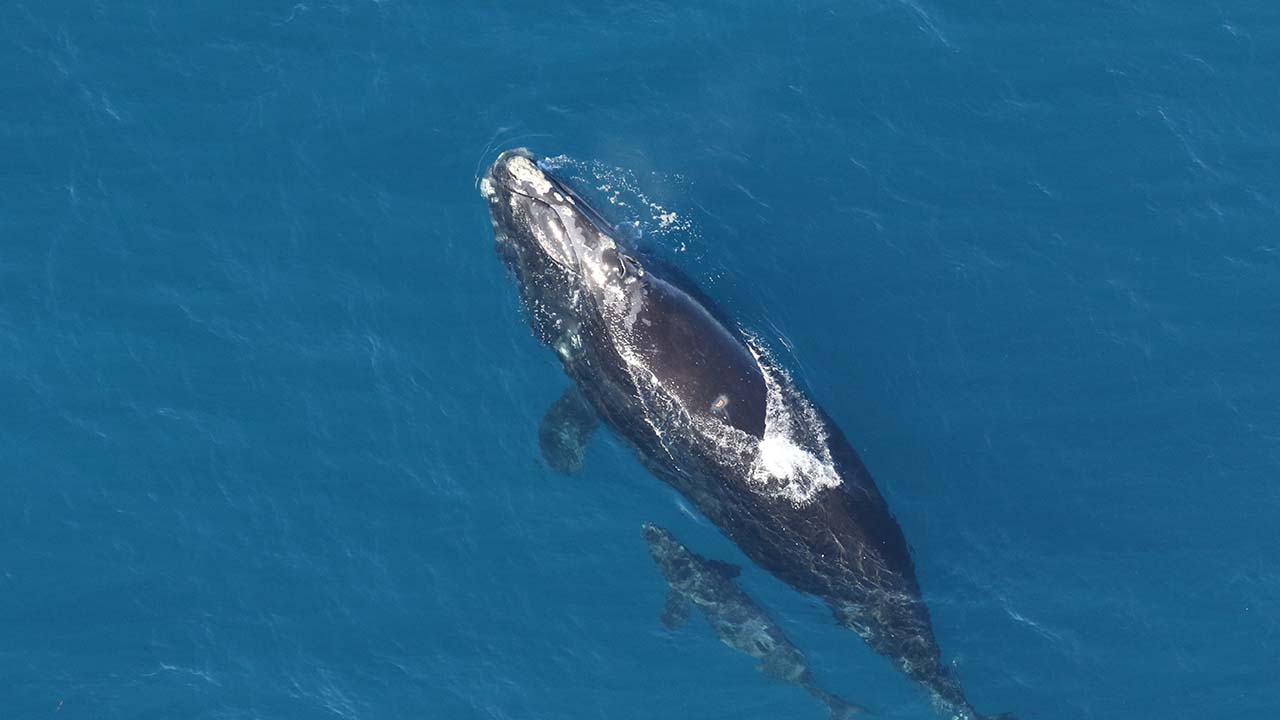
On December 20, 2025, the Clearwater Marine Aquarium’s South Carolina team spotted Tripelago (Catalog #2614) with her sixth known calf off the coast of Georgia. Tripelago was born in 1996 to mother Catalog #1114 and father Catalog #1052. She was named for the three islands (circular callosity patterns) on her head in a triangular shape—a play on the word archipelago. Four out of her five latest calves are still seen regularly, but so far she’s only had one daughter. This daughter, Atoll is just about to turn nine years old, making her an adult in 2026. Perhaps she will make Tripelago a grandmother in the near future!
Tripelago and her calves have been relatively lucky, experiencing just a few entanglements, and mostly minor events. Her brother, Glacier (Catalog #1402) was unfortunately killed by a vessel in 2017. Hopefully Glacier was the exception to this family’s luck and this latest calf will grow up healthy like its siblings.
Harmonia – Catalog #3101
Birth year: 2001
Age: 25 years old
Last calving year: 2020
Previous calves: Catalog #3901, Gully (Catalog #4601), Agave (Catalog #5001)
Other known relatives: 9 siblings, 2 nieces and nephews
Direct human impacts: 10 entanglements
Human impacts on family members: 44 entanglements and 5 vessel strikes
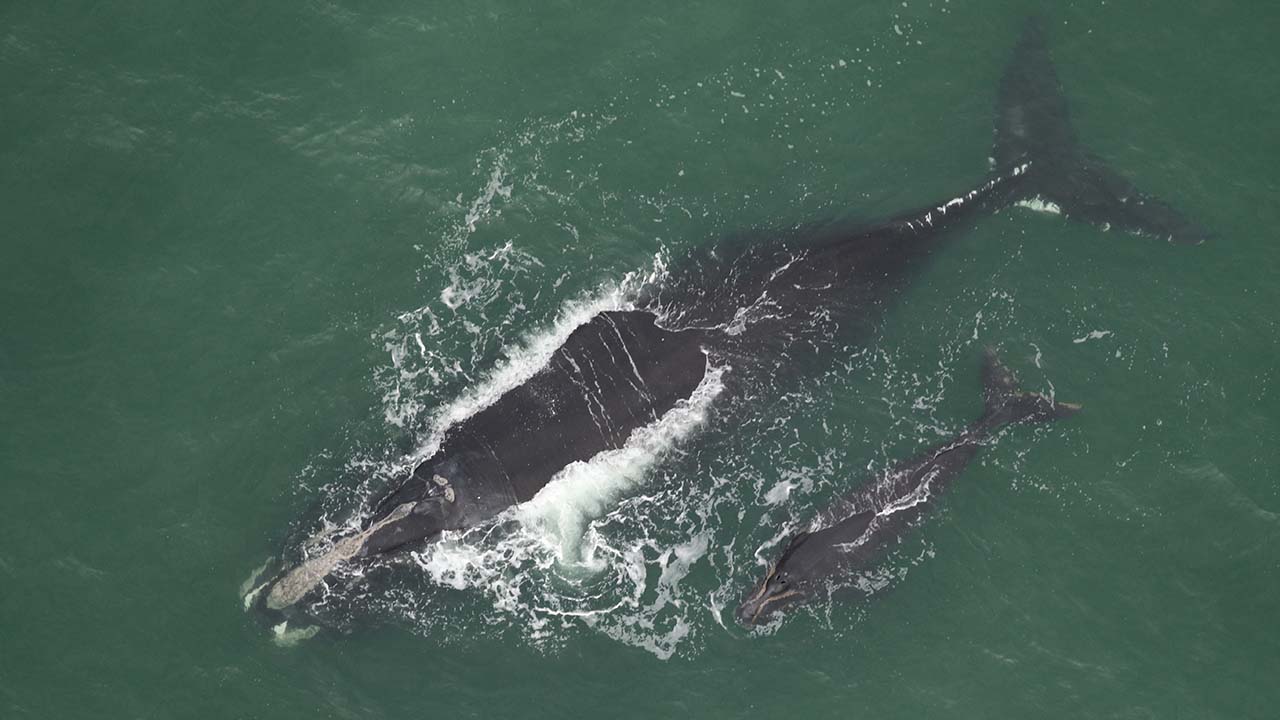
Another calf has been sighted! Lucky number seven was spotted on December 17, 2025 by the Georgia Department of Natural Resources vessel team, and relayed quickly to the nearby aerial survey team from Clearwater Marine Aquarium. The mother, Harmonia (Catalog #3101), is 25 years old and this is her fourth known calf. Harmonia was born in 2001 to mother Aphrodite (Catalog #1701) and father Velcro (Catalog #1306), and her maternal grandmother is Catalog #1219. Her name is a very literal family name as Harmonia is one of the daughters of the Greek goddess, Aphrodite. The Greek mythology names have continued with other relatives including Harmonia’s brother, Eros (Catalog #3701), and her son, Agave (Catalog #5001).
Harmonia has an undesirable superlative in that she has experienced at least ten entanglement events in her life, which is more than any other right whale that we know of. That makes it even more amazing that she’s gone on to give birth to four calves so far! In addition to Harmonia’s ten entanglements, her family members have faced another 44 entanglements and five vessel strikes. Harmonia’s first calf was found dead with propeller cuts at the age of one, and her second calf, Gully (Catalog #4601), hasn’t been seen in several years after a severe entanglement at age two. Her third calf, six-year-old Agave, is still seen regularly, but has also been entangled several times already. We can only hope Harmonia doesn’t seek to maintain her title of most entangled, and that her latest calf breaks the trend of early entanglements and goes on to live a long and healthy life.
Cascade – Catalog #3157
Birth year: 2001
Age: 25 years old
Last calving year: 2022
Previous calves: FDR (Catalog #4057), Seamount (Catalog #4457), and Catalog #5257
Other known relatives: 9 siblings, 12 nieces and nephews
Direct human impacts: 2 entanglements
Human impacts on family members: 36 entanglements and 1 vessel strike (parents, siblings, offspring only)
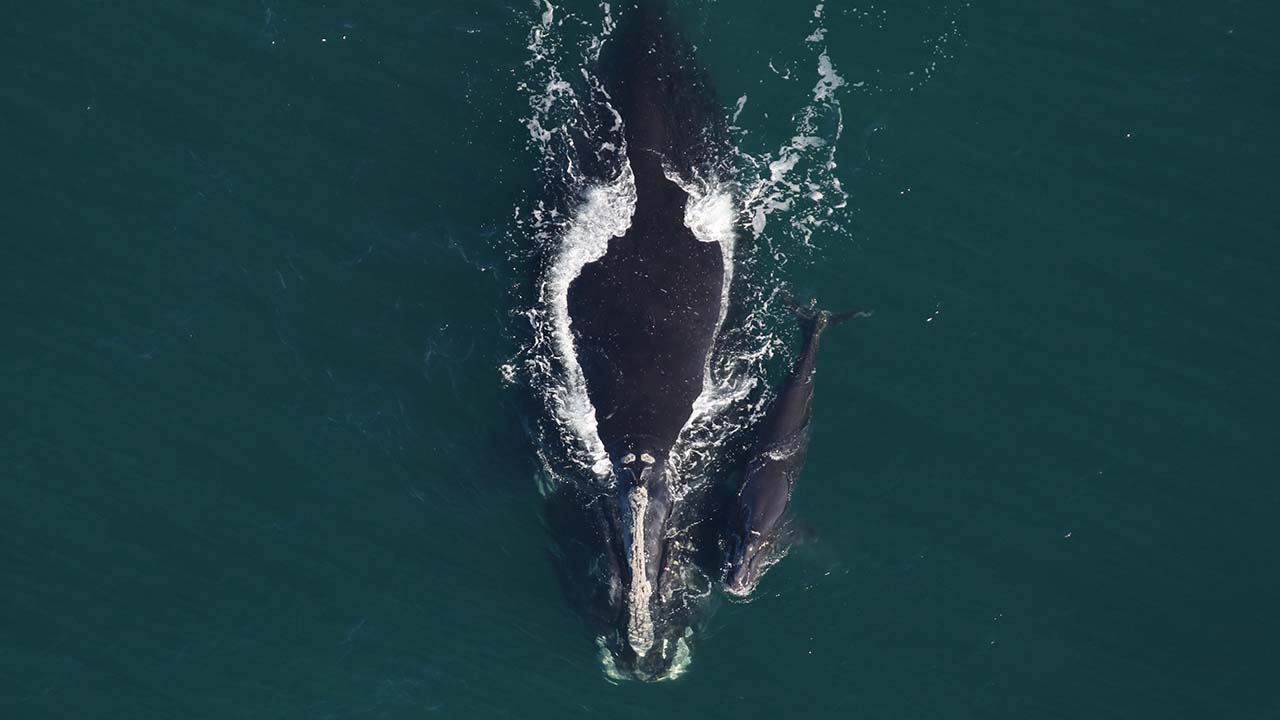
On December 16, 2025, the Clearwater Marine Aquarium’s Georgia team spotted Cascade (Catalog#3157) with her fourth known calf. Cascade was born in 2001 to mother Moon (Catalog #1157) and father Catalog #1033. She has nine known siblings, split nearly evenly between her mother and her father. Having four paternal siblings is quite impressive since the catalog has much more limited information on paternity, given that it can only be known through genetic testing. Cascade’s name comes from the white scarring on either side of her head that cascades down her lips or lower jaw. Cascade’s last two calves are still seen regularly, but her first, FDR, hasn’t been since 2016 when he was severely entangled.
In addition to her first calf’s likely fatal entanglement, Cascade’s immediate family has faced 35 other entanglement events and one fatal vessel strike. Cascade’s two entanglements thankfully haven’t affected her ability to give birth so far, but like many other right whales, the evidence remains visible on her tail stock.
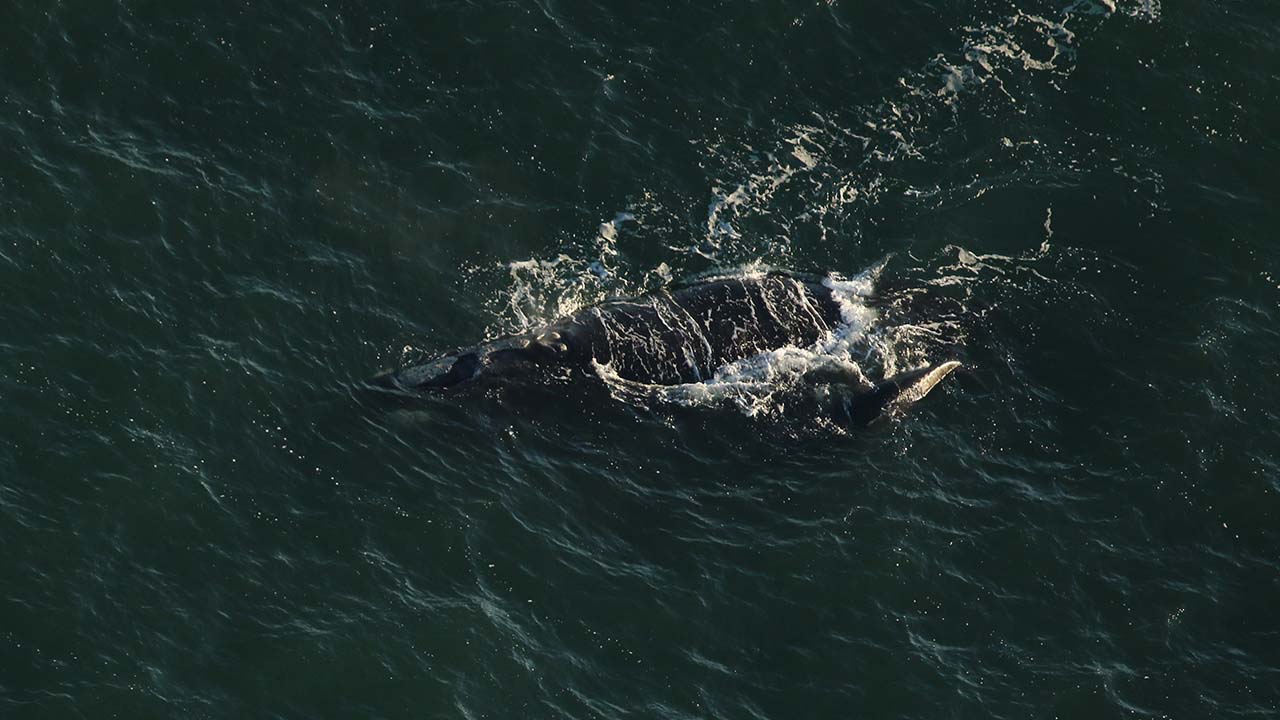
Squilla – Catalog #3720
Birth year: 2007
Age: 19 years old
Last calving year: 2021
Previous calves: #5120
Other known relatives: 4 siblings, 1 niece, and 1 nephew.
Direct human impacts: 3 entanglements
Human impacts on family members: 15 entanglements and 1 vessel strike
On December 11, 2025, the Clearwater Marine Aquarium’s South Carolina team spotted the fifth calf of the season. The mom, Squilla (Catalog #3720) was born in 2007 to mother Mantis (Catalog #1620). She was also named partially in honor of her mom; Squilla is the genus name of the mantis shrimp, and part of her callosity that resembles a mantis shrimp’s bulgy eyes. Her sister, Nymph (Catalog #4020), was also named in relation to mom. Perhaps this calf will carry the naming theme into another generation.
Squilla bears scars from at least three entanglement events, though all seemed to be minor, but many of her relatives have a different story. Her first calf, Catalog #5120, died at the age of three after being entangled in fishing gear for two years. Her niece Catalog #3893 and nephew Catalog #4193 also both died from entanglements at 10 years old and one year old, respectively. Entanglements at young ages are especially difficult because the smaller whales are less able to break away from the ropes and a tightly wrapped rope can quickly become problematic for a whale that’s still growing. The other entanglement events this family has faced were not fatal, but remain a sad reality this species faces regularly.
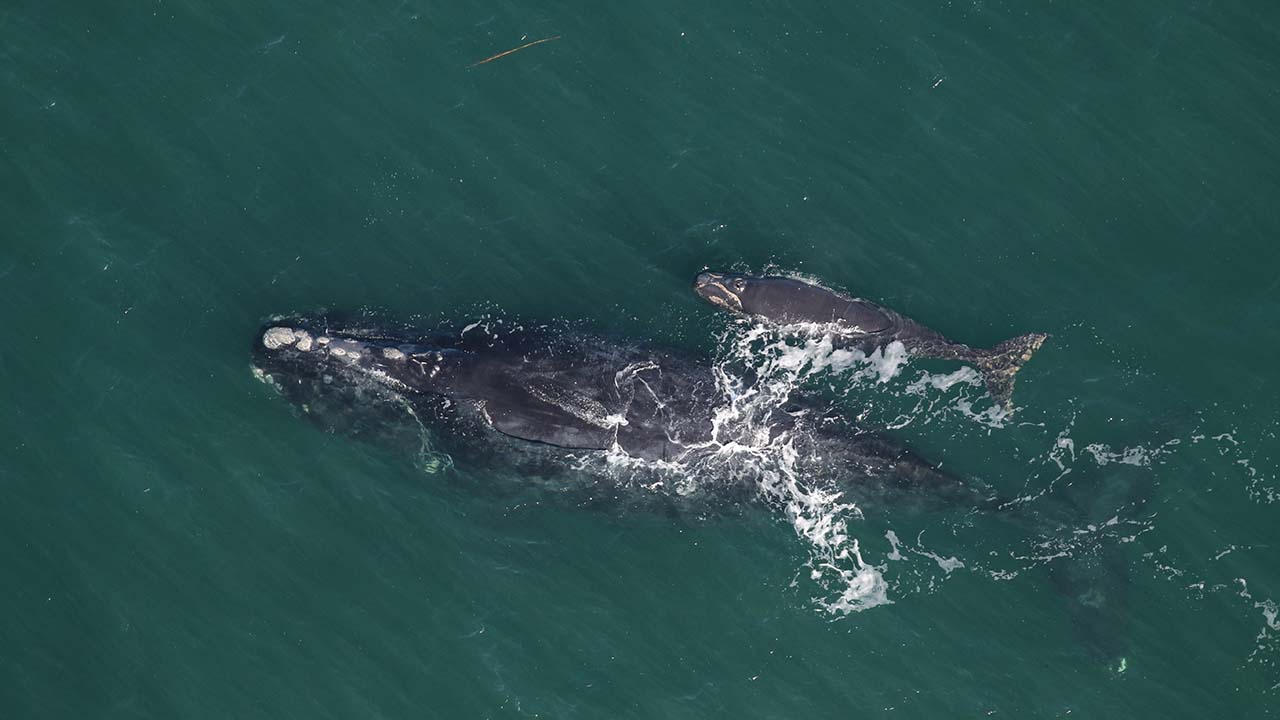
Bocce – Catalog #3860
Birth year: 2008
Age: 18 years old
Last calving year: 2021
Previous calves: Catalog #5160
Other known relatives: Parents, maternal grandparents, 7 siblings, 3 nieces/nephews, 8 aunts/uncles, and 11 cousins
Direct human impacts: 3 entanglements and 2 vessel strikes
Human impacts on family members: 31 entanglements and 2 vessel strikes (between 9 immediate family members)
The fourth calf of the season was spotted off the coast of Georgia on December 10, 2025, by Clearwater Marine Aquarium’s Georgia team. The mother, Bocce (Catalog #3860), was born 18 years ago to mother Naevus (Catalog #2040), and father Trident (Catalog #1113). If that sounds familiar it’s because Bocce’s sister, Millipede, is also a mom this year! (Scroll down for more info on Millipede.) Being another granddaughter of Wart (Catalog #1140), she is part of the same large family tree.
Bocce has at least one previous calf, though she may have given birth twice before. In the 2016 calving season, Bocce was documented raising the calf of another mother. It was eventually discovered there was a three-way calf swap, but only two calves involved. It’s thought that Bocce gave birth to a calf that was quickly lost before being documented, but because of that pregnancy she was able to nurse another calf. It’s unclear why the swap happened—whether calves were “stolen” or the mothers caring for them were filling a need—but because the suspected first calf was never actually seen by anyone, it cannot be cataloged, leaving Bocce’s calf count a bit nebulous.
Bocce was named for the several islands (the circular callosity patches) on her head that resemble a game of bocce ball. She bears scars from at least three entanglements and two vessel strikes, but fortunately those were all considered to be minor injuries. Some of her family members weren’t so lucky. At least three that we know of suffered fatal injuries. Hopefully this new calf will carry its mother’s “lucky genes” and live a long and healthy life.

Callosity Back – Catalog #3760
Birth year: 2007
Age: 19 years old
Last calving year: N/A
Previous calves: N/A
Other known relatives: Parents, 7 siblings, 7 nieces/nephews
Direct human impacts: 3 entanglements
Human impacts on family members: 28 entanglements and 1 vessel strikes (between 8 immediate family members)
On December 4, 2025, the Clearwater Marine Aquarium’s South Carolina team spotted the third calf of the season. Callosity Back (Catalog #3760) was seen with her first calf, making her our first-known first-time-mom of the season! Callosity Back was born in 2007 to mother Derecha (Catalog #2360) and father Gemini (Catalog #1150) who are both still seen regularly. Despite having seven siblings and many nieces and nephews, Callosity Back is the first to calve on her mother’s side, making Derecha a grandmother! Callosity Back’s name may seem a little weird, but there’s no question where it came from: She’s seemingly the only right whale to have callosity patches on her back. These rough patches of skin, that help uniquely identify right whales, are typically only found on the head.
The large numbers of entanglements among her family members is unfortunately a trend that’s not likely to go away as we see more mom-calf pairs. Callosity Back’s family has seen many entanglements; she was entangled at least three times by the age of four, but she escaped those events fairly unscathed and has thankfully avoided any subsequent entanglements for the past ~15 years! We hope she can teach her calf her ways. Her “older” sibling Catalog #5010 who was born in 2020 wasn’t as fortunate. They were struck by a vessel at just a few weeks old, and likely succumbed to its injuries, as they haven’t been seen since.

Millipede – Catalog #3520
Birth year: 2005
Age: 21 years old
Last calving year: 2021
Previous calves: Catalog #5192 and an uncatalogued calf in 2013
Other known relatives: Parents, maternal grandparents, 8 siblings, 3 nieces/nephews, 8 aunts/uncles, and 11 cousins
Direct human impacts: 4 entanglements and 1 vessel strike
Human impacts on family members: 40 entanglements and 3 vessel strikes (between 11 immediate family members)
The second mom-calf pair of the season were spotted off the Florida/Georgia border by Florida Fish and Wildlife on December 3, 2025. The 21-year-old mother, Millipede (Catalog #3520) was seen with her third known calf. Millipede was born in 2005 to mother Naevus (Catalog #2040) and father Catalog #1818, and she has eight siblings. She is also the granddaughter to Wart (Catalog #1140) who has a famously large family tree. While Wart hasn’t been seen in over a decade, she has many generations of females in her family that are continuing her legacy.
A large family like Millipede’s is bound to have their fair share of injury events, but they have exceptionally bad experiences with vessel strikes. Millipede’s name comes from a long series of propeller cuts along her right side she acquired from an interaction with a vessel at just one year old. Luckily for her, these cuts were superficial and seem to be healed. Several of her family members weren’t as lucky; two nephews—Wolverine (Catalog #4023) and Catalog #5130—and a cousin, Catalog #5340, were all killed by vessel early in their lives. Perhaps Millipede will teach her little one to keep a safe distance from boats.
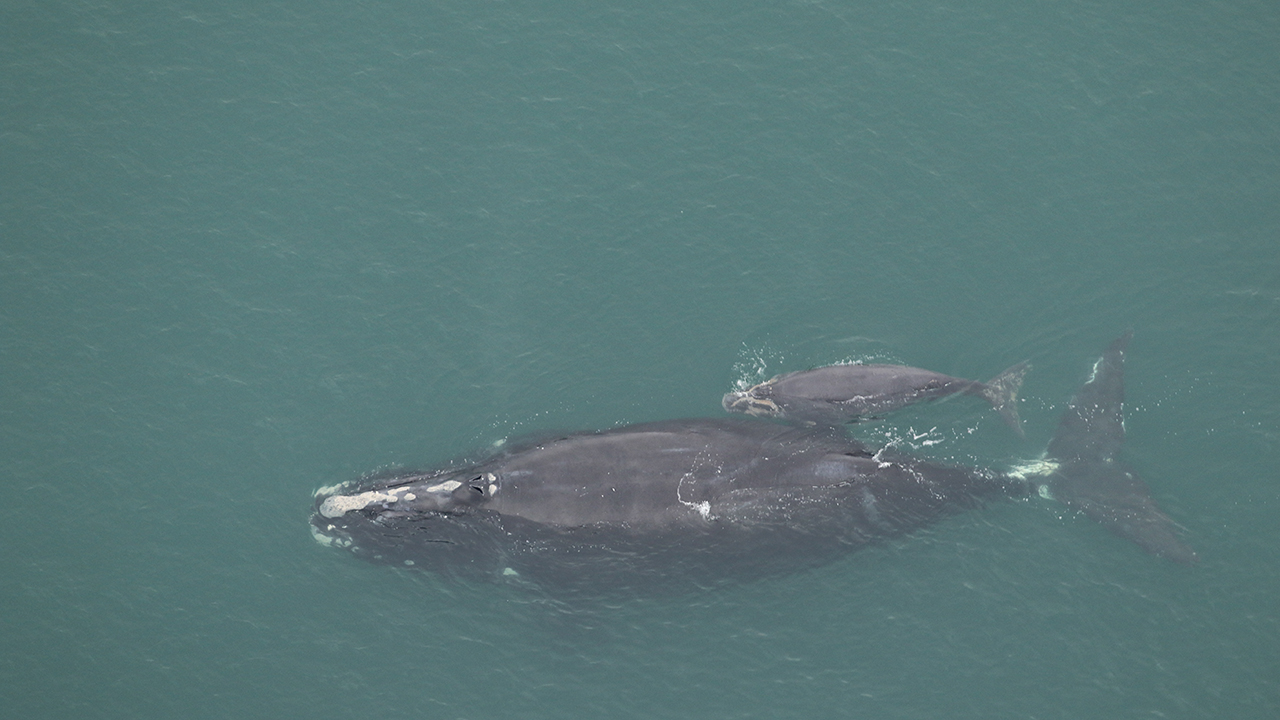
Champagne – Catalog #3904
Birth year: 2009
Age: 17 years old
Last calving year: 2021
Previous calves: Wall-E (Catalog #5104)
Other known relatives: Parents, 8 siblings, 5 nieces & nephews
Direct human impacts: 5 entanglements
Human impacts on family members: 21 entanglements
On November 28, 2025, the first mom-calf pair of the season were seen of the coast of South Carolina!
The Clearwater Marine Aquarium’s South Carolina-based team spotted Champagne (Catalog #3904) with her second known calf. Champagne was born in 2009 to prolific mother Spindle (Catalog #1204), who has 10 known calves, and fathered by Catalog #1050. She was named for the clustered circular parts of the callosity pattern on her head that look like bubbles. This is Champagne’s second calf; the first, Wall-E, who was just named last year, was born in 2021. This five-year calving interval is promising when the more recent average has been closer to 10 years.
Being a calf of such a productive mom means Champagne has many siblings, with at least nine on her mom’s side, though only six have been cataloged. She also has two more siblings on her father’s side. Of her immediate family, nine of them have a total of 26 entanglements. Champagne has very notable scars from her five entanglement events but seems to be doing well. Cheers to what is hopefully just the first of many calves this season!

Related Stories

Make a Difference for Right Whales
These critically endangered animals need our help. See how you can get involved with the Aquarium’s work to protect right whales.